The Future of Moon Colonies: Exciting Lunar Infrastructure Developments in 2026
The idea of permanent human settlements on the Moon has fascinated scientists, engineers, and dreamers for decades. What was once considered science fiction is gradually becoming a realistic long-term goal. Advances in space technology, international cooperation, and commercial space investment are bringing Moon Colonies closer to reality than ever before.
In 2026, governments and private companies are actively developing technologies that could support sustainable human presence beyond Earth. These efforts are not only focused on reaching the Moon but also on building the infrastructure needed to support future lunar communities.
This article explores the future of Moon Colonies, the infrastructure required for long-term habitation, the opportunities they create, and the challenges that must be overcome before humans can establish permanent settlements on the lunar surface.
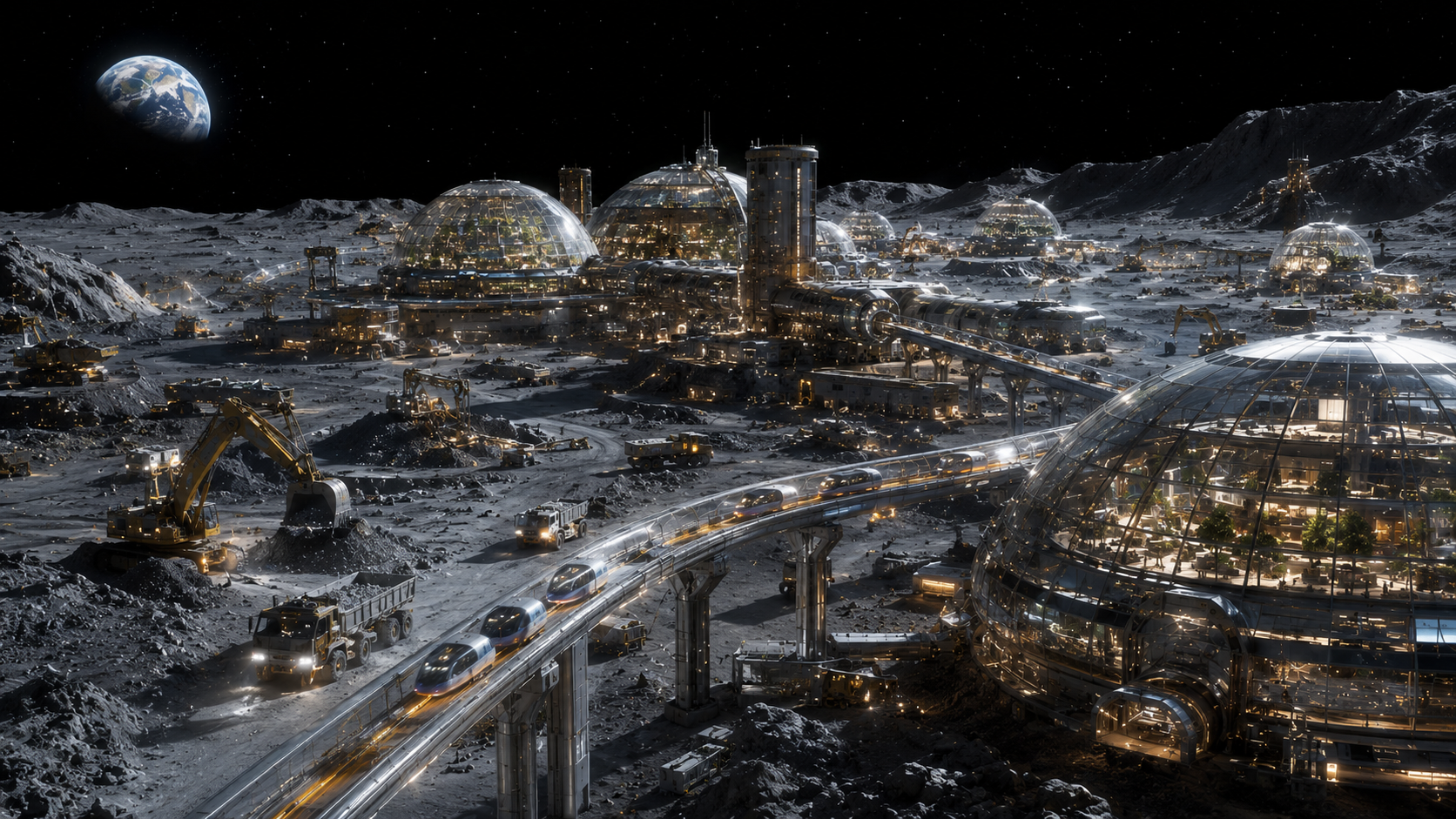
Table of Contents
- What Are Moon Colonies?
- Why the Moon Matters
- Essential Lunar Infrastructure
- Lunar Habitats and Living Systems
- Transportation and Logistics
- Resource Utilization on the Moon
- Economic Opportunities
- Challenges Facing Lunar Settlements
- International Cooperation and Private Investment
- The Future of Moon Colonies
- Conclusion
What Are Moon Colonies?
Moon Colonies are permanent or semi-permanent human settlements established on the Moon. Unlike short-duration missions, these communities would support long-term habitation, scientific research, industrial activities, and potentially commercial operations.
The goal is to create self-sustaining environments that allow people to live and work on the Moon for extended periods. Future settlements may begin as small research bases before expanding into larger communities.
As technology improves, lunar settlements could become important stepping stones for deeper space exploration.
Why the Moon Matters
The Moon offers several advantages for future space development.
First, it is relatively close to Earth compared to other destinations such as Mars. This makes transportation, communication, and emergency support more manageable.
Second, the Moon contains valuable resources that could support future missions and reduce dependence on supplies from Earth.
Researchers are particularly interested in:
- Water ice deposits
- Rare minerals
- Regolith for construction
- Solar energy potential
These resources could help make Moon Colonies more sustainable over time.
Essential Lunar Infrastructure
Building a permanent presence on the Moon requires extensive infrastructure.
Key systems include:
- Habitats
- Power generation facilities
- Transportation networks
- Communication systems
- Resource processing facilities
- Medical support systems
Without reliable infrastructure, long-term human habitation would not be possible.
Developing these systems is one of the highest priorities for future lunar programs.
Lunar Habitats and Living Systems
One of the most important components of Moon Colonies is safe and sustainable housing.
Future lunar habitats must protect residents from:
- Radiation exposure
- Extreme temperatures
- Micrometeorite impacts
- Lunar dust
Engineers are exploring several habitat concepts.
Inflatable Structures
Inflatable habitats can be transported efficiently and expanded after deployment.
Underground Facilities
Some researchers propose building living areas beneath the lunar surface to improve protection.
3D-Printed Habitats
Using lunar materials to construct buildings could reduce transportation costs and improve sustainability.
Advanced life-support systems will also be required to provide air, water, food, and waste management services.
Transportation and Logistics
Reliable transportation will play a critical role in supporting future settlements.
Transport systems will be needed for:
- Crew transfers
- Cargo delivery
- Surface exploration
- Infrastructure construction
Reusable spacecraft and advanced lunar landers are expected to reduce mission costs significantly.
Future lunar vehicles may also transport people and supplies between different locations on the Moon.
Efficient logistics networks will be essential for maintaining Moon Colonies and supporting future growth.
Resource Utilization on the Moon
Transporting everything from Earth would be extremely expensive.
For this reason, future lunar programs are focusing on in-situ resource utilization.
This approach involves using local materials to support operations.
Potential applications include:
- Extracting water from ice deposits
- Producing oxygen
- Manufacturing fuel
- Creating construction materials
Local resource production could dramatically improve the long-term viability of Moon Colonies.
Economic Opportunities
Permanent lunar settlements may create entirely new economic sectors.
Scientific Research
The Moon provides unique conditions for astronomy, physics, and planetary science research.
Space Manufacturing
Low gravity environments may support specialized manufacturing processes that are difficult on Earth.
Resource Extraction
Mining valuable lunar materials could become a future industry.
Space Tourism
As infrastructure expands, the Moon could become a destination for high-end space tourism experiences.
These opportunities may help justify the substantial investments required for lunar development.
Challenges Facing Lunar Settlements
Despite rapid progress, several major obstacles remain.
High Costs
Building and maintaining lunar infrastructure requires enormous financial investment.
Radiation Exposure
The Moon lacks a protective atmosphere and magnetic field.
Long-term exposure to radiation poses health risks for future residents.
Limited Resources
Although useful materials exist on the Moon, extracting and processing them remains challenging.
Technical Complexity
Life-support systems, power generation, and transportation networks must operate reliably in harsh conditions.
Overcoming these challenges will require continued innovation and international collaboration.
International Cooperation and Private Investment
Governments are no longer the only organizations pursuing lunar ambitions.
Private aerospace companies are investing heavily in lunar technologies and transportation systems.
International partnerships are also becoming increasingly important.
Collaborative efforts allow countries and organizations to share expertise, reduce costs, and accelerate development.
These partnerships are expected to play a major role in the success of future Moon Colonies.
The Future of Moon Colonies
The future of Moon Colonies appears increasingly promising.
Over the next decade, experts expect significant advancements in:
- Lunar habitats
- Resource extraction systems
- Surface transportation
- Energy production
- Scientific facilities
Initial settlements will likely remain small and focused on research.
However, successful infrastructure development could eventually support larger communities and commercial activities.
Many experts view the Moon as a critical stepping stone toward future missions to Mars and beyond.
As technologies mature and costs decline, permanent human presence on the Moon may become one of humanity’s most important achievements.
Learn more about NASA’s Artemis Moon exploration program